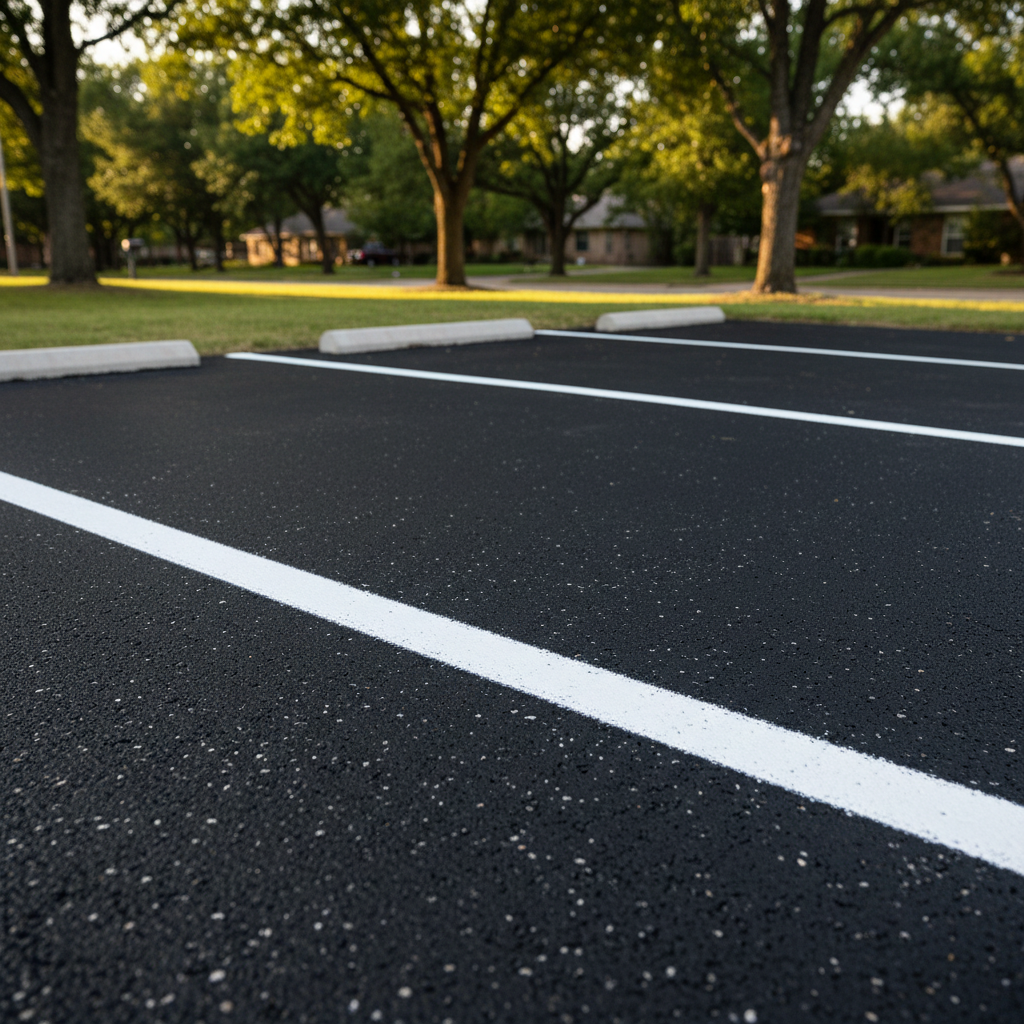
You've got questions about asphalt striping, and believe me, I've heard 'em all. As a local paving guy right here in Irving, I talk to homeowners every day who are just trying to figure out the best way to keep their driveways or private roads looking good and working right. Striping might seem simple, but there's definitely more to it than just slapping down some paint. Let's get into what you really want to know, shall we?
How long does asphalt striping actually last in our Texas heat?
That's probably the number one question I get. Look, we're in Texas, right? That means brutal summers, intense UV rays, and sometimes some pretty wild temperature swings. All that really takes a toll on striping. Generally, for a residential asphalt driveway or private road, you're looking at anywhere from 1 to 3 years for standard traffic paint. If you've got a lot of cars coming and going, or if it's a high-traffic area like a shared private drive, it might be closer to that one-year mark. The quality of the paint really matters, too. We don't skimp on that at All Star Paving, because I know you don't want to redo this every year.
What's the difference between paint and thermoplastic for residential use?
Good question, because you'll hear both terms thrown around. For most homeowners, you're probably going to be using traffic paint. It's cost-effective, dries relatively quickly, and works well for typical driveway lines or parking spots. Thermoplastic, on the other hand, is a much more durable material. It's applied hot and forms a thick, long-lasting bond with the asphalt. You usually see thermoplastic on busy commercial parking lots or city streets because it can withstand heavy traffic and lasts 5-8 times longer than paint. For a home, it's generally overkill and significantly more expensive. Unless you've got a private road that sees constant heavy truck traffic, paint is usually the way to go for residential.
Can I stripe over an old, faded line, or do I need to remove it first?
Most of the time, you can stripe right over a faded line. In fact, that's what we usually do. The old line acts as a guide, which helps keep everything straight and consistent. We'll clean the surface thoroughly first, get rid of any dirt, dust, or loose debris. If the old line is chipping or peeling badly, we might need to do a little prep work to scrape off the loose stuff so the new paint sticks properly. But for just faded lines, a fresh coat usually does the trick and makes it look sharp again.
What's the best time of year to get striping done in Irving?
Timing is pretty important for striping to cure right. You want dry conditions and temperatures that aren't too cold or too hot. Here in Irving, that usually means spring or fall are ideal. We're looking for daytime temps consistently above 50°F (10°C) and below 90°F (32°C). If it's too cold, the paint won't cure properly, and it'll flake off fast. If it's too hot, especially with our intense summer sun beating down on black asphalt, the paint can dry too quickly on the surface, trapping solvents underneath, which can lead to blistering or premature failure. Plus, you don't want rain in the forecast for at least 24 hours after application. So, think mild weather, folks.
How long do I have to stay off the striped area after it's done?
This depends on the type of paint used and the weather conditions. Most traffic paints are designed for quick drying. In good, dry conditions (like a nice spring day here), you can usually drive on it within 30 minutes to an hour. However, to be absolutely safe and ensure a full cure, I always recommend waiting at least 2 to 4 hours, and ideally 24 hours if you can manage it, before heavy vehicle traffic. This gives the paint plenty of time to harden completely and reduces the risk of tire marks or tracking. We'll always give you specific instructions on site, but a few hours is a good rule of thumb.
Does the condition of my asphalt affect how well the striping holds up?
Absolutely, it does. Think of it like painting a wall—you wouldn't paint over crumbling plaster, right? Same goes for asphalt. If your driveway or private road is severely cracked, crumbling, or has a lot of potholes, the striping isn't going to last. The paint needs a stable, clean surface to bond to. If the asphalt underneath is moving or deteriorating, the paint will crack and peel right along with it. We always recommend addressing any major asphalt repairs, like patching or crack sealing, before we come in to stripe. A smooth, well-maintained asphalt surface will hold striping much, much longer.
Hopefully, that clears up some of your questions about asphalt striping for your home. It's not just about making things look neat; it's about safety and functionality too, especially if you've got specific parking areas or traffic flow you need to manage. If you're in the Irving area and thinking about getting some lines laid down, give us a call at All Star Paving. We're happy to come out, take a look, and give you an honest assessment.