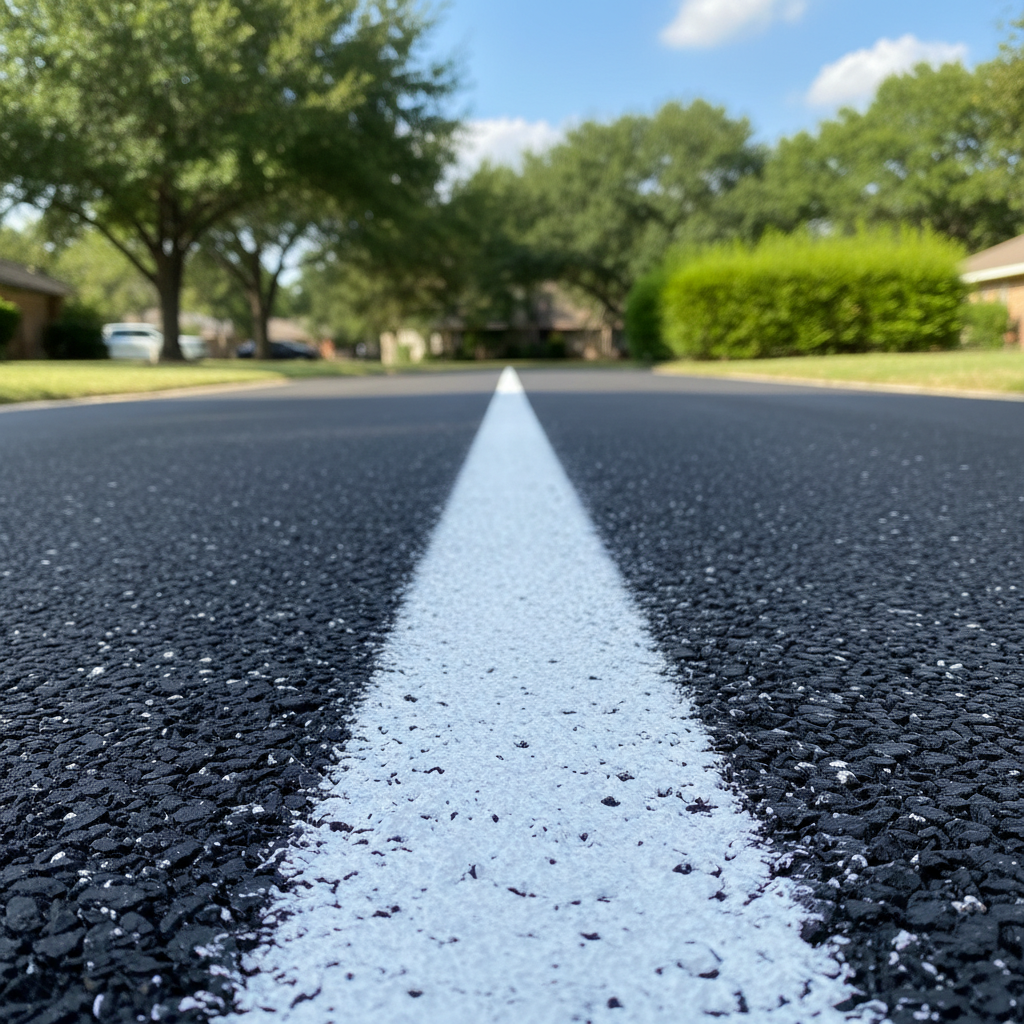
Ever looked at a freshly striped parking lot and thought, "I could do that"? Or maybe you've got a long driveway that needs some clear lines for parking, basketball, or just a neat edge. Asphalt striping seems simple enough, right? Just paint on pavement. Well, like most things, there's a bit more to it than meets the eye, especially if you want it to look good and last.
Before You Start: Planning Your Stripes
First off, figure out what you're striping. Is it a small, private driveway for your home in Las Colinas? Or a larger parking area for a small business? The scale of the job is going to be your biggest indicator of whether you should grab a roller or pick up the phone.
For a homeowner with a simple, straight driveway, or maybe just outlining a parking spot or two, DIY is definitely an option. You'll need to measure everything out. Seriously, don't just eyeball it. Get a tape measure, some chalk, and a good straightedge. Think about the purpose of the lines. Are they parking stalls? A no-parking zone? A basketball court? Standard parking stall width is usually 9 to 10 feet, with a length of 18 to 20 feet. If you're just doing a border, decide how wide you want that line to be – typically 4 inches is standard for parking lots, but you might go narrower for decorative stuff.
Consider the surface too. Is your asphalt clean? Any oil stains or loose debris? You'll need to clean it thoroughly. A pressure washer works wonders, but make sure the surface is completely dry before you even think about painting. If you skip this step, your paint won't stick, and you'll be redoing it in a few months, especially with our Texas heat and occasional heavy downpours that can really test a poor paint job.
During the Project: DIY vs. Professional Tools
Alright, let's talk tools. For a small DIY job, you can get away with painter's tape, a long straightedge (a 2x4 works), and a good quality asphalt or traffic paint. Don't skimp on the paint; cheap stuff fades fast and chips easily. You'll also need a roller with a thick nap or a sturdy brush. Take your time taping off your lines. This is where precision pays off. Once you start painting, try to keep an even coat. Two thin coats are always better than one thick, gloppy one.
Now, if you're looking at more than just a couple of lines – say, a whole cul-de-sac for a small apartment complex, or a larger commercial parking lot – that's when you really need to consider a professional. We're talking about specialized striping machines. These aren't just fancy paint sprayers; they're designed to lay down consistent, clean lines at a specific width and thickness, often with reflective beads mixed in for better visibility at night. Trying to replicate that with a roller and tape? You'll be there all day, and it won't look nearly as good or last as long.
A pro also knows about things like ADA compliance for handicap parking spaces, fire lanes, and directional arrows. There are specific dimensions and regulations for these, and getting them wrong can lead to fines or accessibility issues. We've seen folks try to wing it, and it usually ends up costing them more to fix later.
After the Stripes Are Down: Curing and Maintenance
Once your lines are painted, whether by you or a pro, the most important thing is to let them cure. Traffic paint usually needs at least 24-48 hours to fully dry and harden, depending on humidity and temperature. Here in Irving, especially in the summer, things dry pretty quick, but don't push it. Driving over wet paint is a mess you don't want to deal with.
Maintenance is pretty straightforward. Keep the area clean. Sweep away dirt and debris regularly. If you notice any chips or fading, address them quickly. A small touch-up is much easier than re-striping an entire section. With our intense Texas sun, even good quality paint will eventually fade. You can expect DIY lines to last a couple of years, maybe three if you did a really good job and used quality materials. Professionally applied lines, especially with the right paint and equipment, can easily last three to five years, sometimes longer, before needing a refresh.
So, can you stripe your own asphalt? For small, simple projects, absolutely. It's a satisfying DIY job. But for anything larger, more complex, or requiring specific compliance, you're better off trusting it to the folks who do it every day. At All Star Paving, we've got the equipment and the know-how to get those lines looking sharp and lasting long. It saves you time, effort, and often, headaches down the road.